Hybrid and gig work topics resonate strongly for recruitment agency blogs in 2026, offering evergreen appeal with timely hooks for India’s flexible job market.
Gig work and hybrid models represent flexible work trends shaping recruitment in 2026, particularly for tech and IT roles in India, where agencies can match candidates by career stage to boost retention. Gig offers project-based autonomy ideal for skill-building, while hybrid blends office collaboration with remote flexibility for stability. This blog post outlines key matches, drawing from global shifts and your agency’s focus.
Early Career: Gig for Exploration
Entry-level professionals (0-5 years) thrive in gig roles via platforms like Upwork, gaining diverse experiences without full commitments—perfect for today’s growing freelance tech pool. Hybrid provides structure but risks overwhelming newbies lacking self-discipline. Recruiters: Pitch gigs to fresh grads experimenting in coding or design.
Mid-Career: Hybrid for Growth
For 5-15 year veterans like many of your candidates, hybrid excels with office days for networking and remote for work-life balance, supporting promotions in agency firms. Gig supplements income during transitions, such as IT consulting side projects. Hybrid cuts turnover by 25% through team synergy.
Late Career: Hybrid with Gig Autonomy
Senior leaders (15+ years) favour hybrid for strategic in-person sessions and remote oversight, aligning with agency ownership needs. Gig suits advisory contracts post-retirement, offering independence without daily grind. Use assessments to match: autonomy seekers to gigs, collaborators to hybrid.
Jacob sat at his desk, hands on his head, staring at the blank screen of his laptop. The laid-off email from last week echoed in his mind like a bad dream. After twenty years of dedication to the same company, he found himself at a crossroads, jobless at fifty. The thought of starting over was daunting, but he knew he couldn’t let fear paralyze him.
“I can’t believe this is happening to me,” Jacob murmured to himself. His wife, Maria, walked into the room, her warm gaze filled with empathetic concern.
“Jacob, I know this is hard, but remember when our first restaurant closed? You didn’t let that stop you. You turned it into an opportunity to learn and grow.”
Jacob sighed, remembering those difficult days. “But this is different, Maria. I’m not young anymore. Finding a new job at my age seems impossible.”
Maria smiled gently. “Challenges are opportunities to improve and grow. You’ve always believed that.”
Her words struck a chord. Jacob had always instilled a growth mindset in his children, encouraging them to see challenges as stepping stones rather than stumbling blocks. It was time to take his own advice.
That evening, Jacob dusted off his old resume and began updating it. Each entry reminded him of the skills and experiences he’d gained over the years. “Every effort I make is getting me closer to my goal,” he reminded himself.
In the weeks that followed, Jacob faced rejection after rejection. Each “no” felt like a weight on his shoulders, but he persisted. He started attending career workshops and networking events, learning about current industry trends and how to market his skills effectively.
At one event, he met a woman named Lisa. She was in her early forties and had recently transitioned into a new career after losing her job of fifteen years. Her story was inspiring. “I didn’t know the first thing about marketing when I started,” Lisa confessed. “But I took online courses, volunteered to get experience, and kept applying. Eventually, I landed a job with a company that values my effort and dedication.”
Jacob felt a glimmer of hope. “If Lisa can do it, so can I,” he thought. “I can learn from my mistakes and do better next time.” He asked Lisa for advice on updating his LinkedIn profile. She provided invaluable tips and even offered to introduce him to a few contacts.
Feedback from his family and new friends helped Jacob refine his strategy. He realized he needed to tailor his applications to highlight his adaptability and continuous learning. Each new application was an opportunity for improvement.
One afternoon, while scrolling through job postings, Jacob found a position that seemed perfect. It was at a tech start-up looking for someone with experience in operations and a willingness to mentor younger employees. The thought of guiding others excited him. He spent the next few days meticulously crafting his cover letter and updating his resume.
“Dad, can you help me with my science project?” Jacob’s son, David, asked one evening.
“Sure thing, buddy!” As Jacob guided David through the intricacies of the project, he realized that teaching came naturally to him. “I’ve always enjoyed mentoring. Maybe that’s my strength,” he thought.
A few days after submitting his application to the start-up, Jacob received a phone call. “Mr. Anderson, we would like to invite you for an interview.”
Anxiety and excitement battled within him. “This is it,” he thought. “Challenges are opportunities to improve and grow.”
The interview was intense, but Jacob saw it as a conversation rather than an interrogation. He discussed his experiences, his approach to mentoring, and his eagerness to learn new technologies. He highlighted how he turned every setback into a stepping stone and how he viewed effort as the path to mastery.
A week later, Jacob received another call. “We were very impressed with your interview, Mr. Anderson. We believe you would be a great fit for our team. Welcome aboard!”
Jacob felt a wave of relief and pride. He had done it. He had turned an unexpected job loss into a new beginning. “Every effort I make is getting me closer to my goal,” he reflected.
Later that evening, Jacob shared the good news with his family. “I couldn’t have done it without your support and encouragement,” he said, hugging Maria and the kids.
Young David looked up at his father with admiration. “I want to be just like you when I grow up, Dad.”
Jacob smiled, ruffling his son’s hair. “Remember, David, it’s not about never falling. It’s about always getting back up. We can all learn from our mistakes and grow stronger.”
As Jacob looked around at his loving family, he felt a renewed sense of purpose. This was just the end of one chapter and the beginning of another. And he was ready to embrace it with open arms, knowing that every challenge was an opportunity to grow.
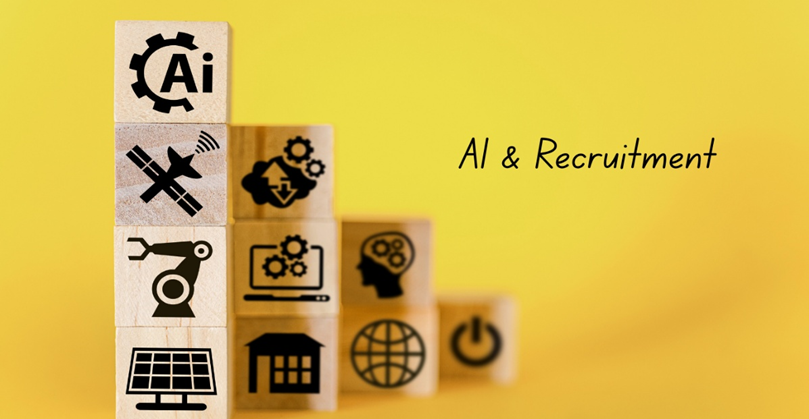
Artificial Intelligence (AI) technology refers to the development and use of computer systems that can perform tasks that typically require human intelligence. Artificial Intelligence (AI) offers a wide range of benefits across various sectors and industries. these tasks include learning, reasoning, problem-solving, perception, language understanding, and even decision-making. AI technology is a broad field that encompasses various approaches and techniques.
AI has significantly impacted the field of recruitment and human resources, transforming traditional processes and providing new tools to streamline and enhance various aspects of the hiring process.
Several AI tools are used in recruitment to streamline processes, enhance decision-making, and improve overall efficiency.
However, there are specific tasks that AI can help automate, meaning that humans and AI will be working alongside each other, which will increase efficiency and improve the candidate experience.
Skills-based hiring is an approach to talent acquisition that focuses on assessing and selecting candidates based on their specific skills, competencies, and abilities rather than solely on their educational background or previous job titles. This approach is gaining popularity as it offers several advantages in identifying candidates who possess the exact skills needed for a particular role. Skills based talent is especially valuable in industries where rapid technological changes or evolving job demands make traditional qualifications less reliable indicators of a candidate’s potential success in a role. It supports a more precise and targeted approach to finding the right talent for specific job requirements.
Based on the most recent trends in recruitment, recruitment manager prioritizes candidates who possess specific experience and skills over their resumes and general talent acquisition experience. Hiring decisions within the company will be based on the candidate’s proficiency in innovative technologies, such as blockchain, artificial intelligence, cybersecurity, and others.
Some significant feature includes:
Conduct interviews that assess candidates’ skills directly. This might include scenario-based questions, problem-solving exercises, or technical assessments related to the job requirements.
Stay abreast of industry trends and emerging skills relevant to the job. Regularly update skill requirements to reflect changes in technology, methodologies, or industry standards.
A skills-based approach emphasizes a growth mindset, encouraging employees to continuously learn and develop new skills. This aligns with the evolving nature of many industries where employees need to adapt to stay relevant.
Stay abreast of industry trends and emerging skills relevant to the job. Regularly update skill requirements to reflect changes in technology, methodologies, or industry standards.
Entrepreneurs benefit from skill-based knowledge as they often need a diverse set of skills to establish and grow their businesses. Practical expertise is crucial for problem-solving and decision-making in entrepreneurial ventures.
Overall, skill-based knowledge is a valuable asset that can positively impact various aspects of an individual’s professional and personal life. It provides a foundation for success, adaptability, and continuous growth in today’s dynamic and competitive world.